Cashback Mechanics: Thresholds, Multipliers, and Their Role in Licensed Betting Platforms
Willa Patterson · Oct 5, 2026
Cashback Mechanics: Thresholds, Multipliers, and Their Role in Licensed Betting Platforms
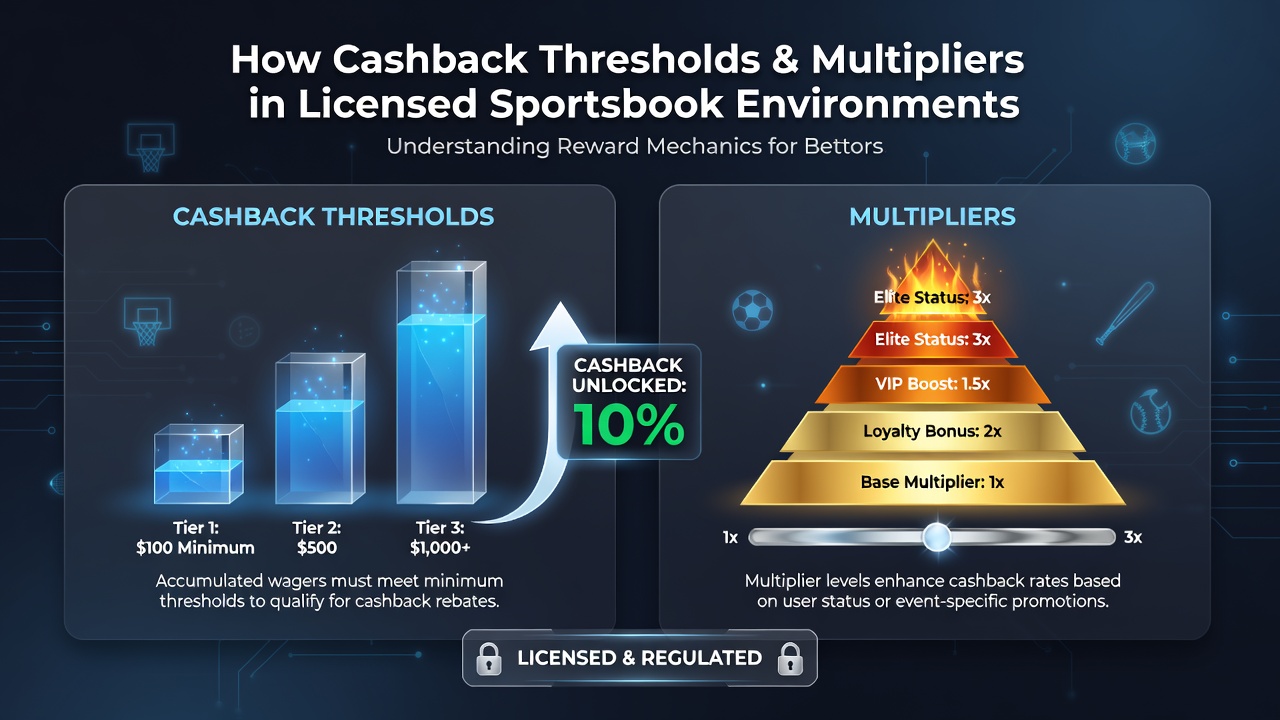
Regulated sportsbooks operate cashback programs that return a percentage of net losses to players once certain conditions are met, and these systems rely on clearly defined thresholds alongside variable multipliers to determine payout amounts. Thresholds establish the minimum qualifying loss or wager volume required before any refund activates, while multipliers adjust the base cashback rate according to player activity levels or account tiers.
Data from industry reports indicate that operators in markets such as New Jersey and Ontario calculate eligibility through net loss formulas, subtracting winnings from total stakes before applying the refund percentage. This approach ensures cashback reflects genuine exposure rather than gross activity alone.
Defining Threshold Structures in Licensed Environments
Thresholds function as entry points that filter which players receive cashback in any given period, and they typically appear as fixed dollar amounts or percentage-based targets tied to weekly or monthly cycles. For instance, a platform might require $200 in net losses before a 10 percent cashback applies, meaning only players who exceed that figure qualify for the refund. Regulators in multiple jurisdictions mandate transparent disclosure of these figures to prevent misleading promotions, according to guidelines from the New Jersey Division of Gaming Enforcement.
Operators often layer additional conditions onto thresholds, such as minimum bet counts or specific market restrictions, which prevent low-volume accounts from triggering payouts. Those who've examined platform terms note that rolling thresholds reset at the start of each promotional window, creating predictable cycles for frequent participants.
How Multipliers Adjust Refund Rates
Multipliers scale the base cashback percentage upward based on cumulative activity, and they commonly range from 1.2x for standard users to 3x or higher for those reaching premium volume milestones. A player with a 15 percent base rate who qualifies for a 2x multiplier receives an effective 30 percent return on qualifying losses, though the exact application follows formulas that cap total refunds per cycle. Research from academic studies on gambling economics shows these systems encourage sustained engagement without guaranteeing proportional returns across all user segments.
Platforms calculate multiplier eligibility through tracked metrics including total handle, number of settled bets, and consecutive active days, then apply the adjusted rate automatically once thresholds clear. This automation reduces manual processing while maintaining compliance with audit requirements set by bodies like the Malta Gaming Authority.
Calculation Examples Across Different Tiers
Consider a scenario where a sportsbook sets a $150 net loss threshold paired with tiered multipliers: users at the entry level receive 1x on a 12 percent base, mid-tier accounts access 1.8x after $1,000 in monthly handle, and top accounts unlock 2.5x after $5,000. If a mid-tier player records $800 in net losses, the system applies the 1.8x multiplier to yield $172.80 in cashback, provided the threshold was met earlier in the period. Such examples appear in operator documentation and illustrate how small changes in activity produce measurable differences in returns.
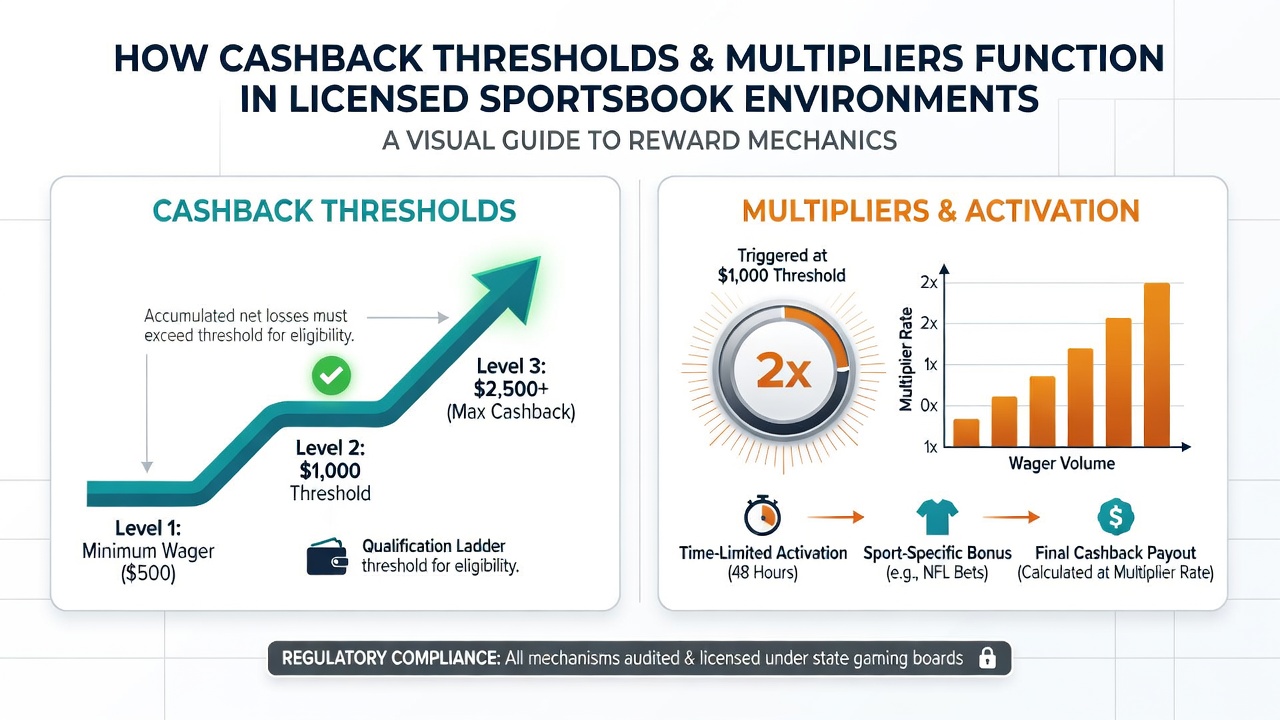
Figures from quarterly industry summaries reveal that multiplier adjustments often coincide with loyalty program updates, allowing operators to align cashback incentives with broader retention strategies. Players who monitor their progress through account dashboards can anticipate when thresholds and multipliers will combine for larger refunds.
Regulatory Oversight and Compliance Factors
Licensed operators must submit cashback program rules to regulatory agencies for approval, and these submissions detail exact threshold values, multiplier schedules, and maximum refund caps to ensure fairness. Data shows that audits conducted by Canadian provincial regulators have identified cases where unclear threshold language led to revised terms, prompting clearer communication to users. External links to such oversight reports appear on official sites including those maintained by the Alcohol and Gaming Commission of Ontario.
Multipliers tied to VIP progression require operators to maintain verifiable records of how activity translates into tier advancement, a process that independent testing labs review periodically. This verification step protects both players and platforms by confirming that calculations follow published formulas without deviation.
Integration With Broader Reward Systems
Cashback thresholds and multipliers frequently interact with reload bonuses and referral incentives, creating combined offers where meeting one threshold unlocks eligibility for others. Industry organizations such as the American Gaming Association have documented how these layered mechanics appear in operator marketing across multiple states, with data indicating higher retention rates among users who track their progress toward combined rewards.
October 2026 reporting from market analysts shows continued refinement of these systems as operators respond to increased competition, with some platforms introducing dynamic multipliers that adjust in real time based on live betting volume. Such adaptations remain subject to the same regulatory scrutiny applied to static structures.
Conclusion
Thresholds establish minimum qualification points while multipliers scale returns according to activity metrics, and together they form the core mechanics of cashback distribution in licensed sportsbooks. Observers note that transparent implementation of these elements supports compliance across jurisdictions while providing predictable outcomes for participants who review terms carefully. Data from regulatory filings and academic analyses continue to inform how these programs evolve in response to market conditions and oversight requirements.